 EN
EN

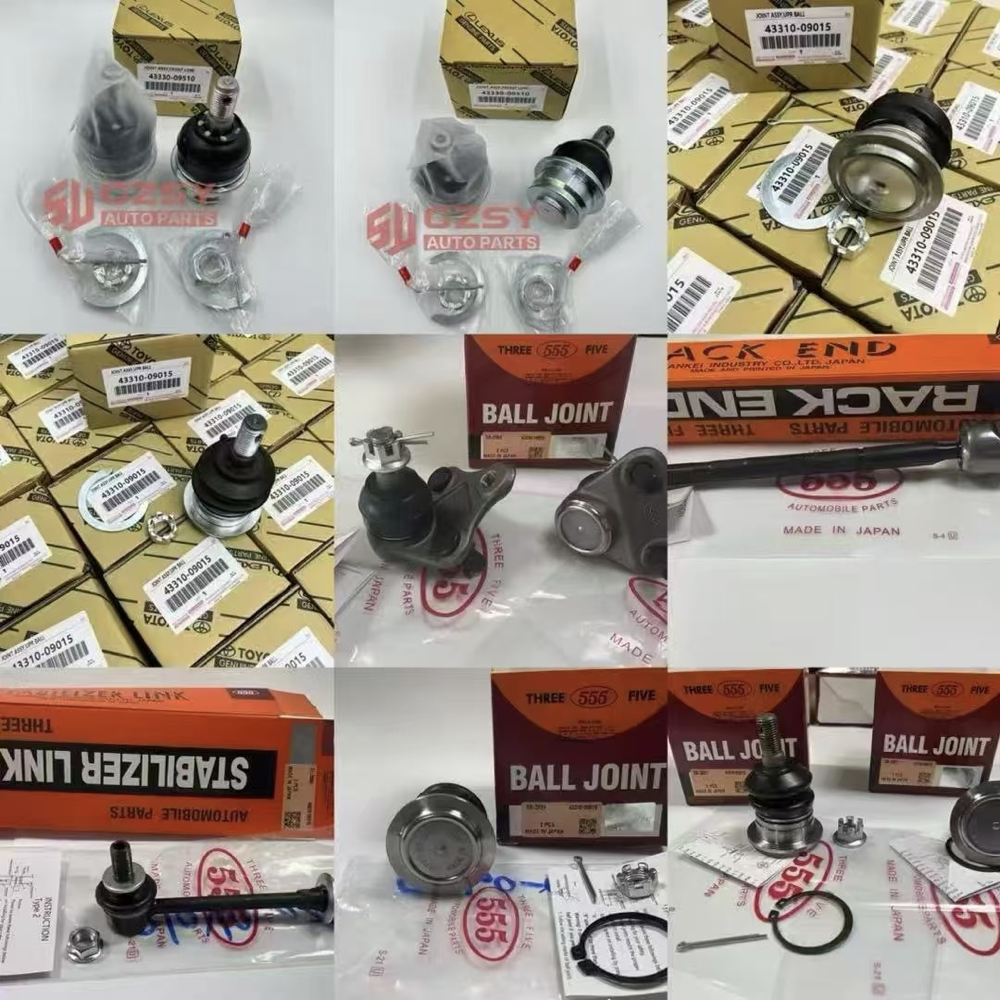
The electric vehicle revolution has fundamentally altered the automotive supply chain, forcing global Tier-1 suppliers to reconsider their sourcing strategies and manufacturing partnerships. As traditional automotive powerhouses scramble to meet aggressive EV production targets, an unexpected shift is occurring: leading international suppliers are increasingly turning to China's sophisticated auto parts manufacturing ecosystem for critical EV components.
This strategic realignment represents more than simple cost optimization. Global Tier-1 suppliers recognize that partnering with an auto parts factory in China offers unique advantages in the rapidly evolving EV landscape, from advanced battery technology expertise to vertically integrated supply chains that can deliver both innovation and scale. The question is no longer whether to engage with Chinese manufacturers, but how to structure these partnerships for maximum competitive advantage in the electric mobility era.
China's EV Manufacturing Ecosystem Advantage
Advanced Battery Technology Integration
China's dominance in battery technology creates a compelling case for Tier-1 supplier partnerships. When working with an auto parts factory in China, global suppliers gain direct access to cutting-edge lithium-ion battery manufacturing capabilities, advanced cell chemistry innovations, and integrated battery management systems. This proximity to battery technology leaders enables faster product development cycles and more cost-effective integration of power systems into vehicle architectures.
The technological sophistication extends beyond basic battery production. Chinese manufacturers have developed specialized expertise in thermal management systems, high-voltage electrical components, and power electronics that are essential for EV performance. An auto parts factory in China can provide comprehensive solutions that span from individual components to complete electric powertrain assemblies, offering Tier-1 suppliers a level of integration that would require multiple partnerships elsewhere.
Furthermore, the rapid iteration cycles common in Chinese manufacturing enable faster prototyping and testing of new EV technologies. This agility proves crucial when global automotive OEMs demand shortened development timelines for new electric vehicle models, making partnerships with Chinese manufacturers strategically valuable for maintaining competitive positioning.
Vertically Integrated Supply Chains
The vertical integration advantages of partnering with an auto parts factory in China extend far beyond simple manufacturing efficiency. Chinese automotive suppliers have systematically built comprehensive supply ecosystems that encompass everything from raw material processing to finished component assembly, creating unprecedented control over quality, cost, and delivery timelines.
This integration proves particularly valuable for EV components, where supply chain disruptions can severely impact production schedules. A well-established auto parts factory in China typically maintains direct relationships with rare earth mineral suppliers, semiconductor manufacturers, and specialty materials producers, creating resilience against the supply shortages that have plagued the global automotive industry.
The economies of scale achieved through vertical integration also enable competitive pricing structures that global Tier-1 suppliers find difficult to match through traditional Western manufacturing partnerships. These cost advantages become critical when automotive OEMs face pressure to reduce EV prices while maintaining profitability in an increasingly competitive market.
Strategic Cost and Scale Benefits
Manufacturing Cost Optimization
The cost advantages of partnering with an auto parts factory in China go well beyond traditional labor cost differentials. Modern Chinese automotive manufacturing facilities leverage advanced automation, lean production methodologies, and sophisticated quality control systems that deliver cost efficiency through operational excellence rather than simply lower wages.
For EV components specifically, Chinese manufacturers benefit from concentrated expertise in high-volume production of complex electronic systems. The learning curve advantages accumulated through massive domestic EV production volumes translate into manufacturing efficiencies that reduce per-unit costs significantly compared to suppliers still scaling up their EV component production capabilities.
Additionally, the competitive landscape among Chinese automotive suppliers creates downward pressure on pricing while driving continuous improvement in manufacturing processes. Global Tier-1 suppliers can leverage this competitive dynamic to secure favorable pricing structures for long-term supply agreements, providing cost predictability that supports their own customer relationships with automotive OEMs.
Production Scale and Flexibility
The production scale capabilities available through partnership with an auto parts factory in China enable Tier-1 suppliers to meet the ambitious volume targets that automotive OEMs are setting for their EV programs. Chinese manufacturers have demonstrated ability to rapidly scale production from prototype quantities to millions of units annually, supporting the aggressive EV adoption timelines that global automakers have committed to achieving.
This scalability extends to production flexibility, where Chinese manufacturers can accommodate varying product specifications across different global markets within the same production facilities. The ability to produce components meeting European safety standards, American regulatory requirements, and Asian market preferences from a single manufacturing base provides significant operational advantages for Tier-1 suppliers serving global automotive customers.
The speed of capacity expansion represents another critical advantage. While establishing new production capacity in Western markets often requires years of planning and construction, partnering with an established auto parts factory in China can provide access to expandable capacity that can be brought online within months to meet unexpected demand surges.
Technology Transfer and Innovation Collaboration
Research and Development Synergies
The innovation benefits of partnering with an auto parts factory in China extend far beyond simple manufacturing services. Chinese automotive suppliers have invested heavily in research and development capabilities, creating opportunities for genuine technology collaboration that can accelerate product development cycles for global Tier-1 suppliers.
These R&D capabilities are particularly strong in areas critical to EV success, including power electronics, motor control systems, and advanced materials science. By partnering with Chinese manufacturers, Tier-1 suppliers can access specialized engineering expertise that complements their own capabilities, creating more comprehensive solutions for automotive OEM customers.
The collaborative approach also enables faster adaptation to emerging EV technologies. As new battery chemistries, charging protocols, and vehicle architectures emerge, partnerships with innovative Chinese manufacturers provide Tier-1 suppliers with earlier access to next-generation manufacturing processes and design methodologies.
Intellectual Property and Knowledge Sharing
Modern partnerships between global Tier-1 suppliers and an auto parts factory in China increasingly involve sophisticated intellectual property sharing arrangements that benefit both parties. These collaborations enable joint development of proprietary technologies while maintaining appropriate protection of core competitive advantages.
The knowledge sharing extends to manufacturing best practices, quality management systems, and process optimization techniques. Global suppliers often find that their Chinese partners bring fresh perspectives on manufacturing efficiency and cost reduction that can be applied across their entire global production network.
Furthermore, the rapid pace of innovation in China's EV ecosystem means that partnering manufacturers are constantly exposed to new technologies and market trends. This exposure provides valuable market intelligence that helps Tier-1 suppliers anticipate future technology directions and prepare their product development strategies accordingly.
Market Access and Regional Strategy
Chinese EV Market Penetration
Partnering with an auto parts factory in China provides Tier-1 suppliers with crucial access to the world's largest and most rapidly growing EV market. The Chinese automotive market's unique characteristics, including consumer preferences for advanced connectivity features and government support for domestic EV adoption, create opportunities that require local manufacturing partnerships to fully exploit.
Local production through Chinese partners also helps Tier-1 suppliers navigate complex regulatory requirements and certification processes that can be challenging for foreign companies to manage independently. The regulatory expertise that established Chinese manufacturers possess proves invaluable when bringing new EV components to market quickly and efficiently.
Additionally, proximity to Chinese automotive OEMs enables more responsive customer service and faster product customization cycles. The ability to provide rapid prototyping, testing, and modification services directly supports the agile development processes that characterize successful EV programs in the Chinese market.
Regional Supply Chain Optimization
The geographic advantages of working with an auto parts factory in China extend throughout the Asia-Pacific region, where automotive production is increasingly concentrated. Chinese manufacturers typically maintain established distribution networks and logistics capabilities that facilitate efficient supply to automotive plants across Southeast Asia, Japan, and South Korea.
This regional optimization becomes particularly valuable as automotive OEMs establish new EV production facilities throughout Asia to serve both local and export markets. The ability to supply these facilities from centralized Chinese production bases reduces logistics complexity and inventory carrying costs while maintaining supply chain responsiveness.
The established infrastructure for cross-border trade and customs processing also streamlines supply chain operations for Tier-1 suppliers serving multiple Asian markets from Chinese manufacturing partners. This operational efficiency translates directly into competitive advantages when competing for regional supply contracts with automotive OEMs.
FAQ
How do quality standards compare between Chinese auto parts factories and traditional Western suppliers?
Modern auto parts factories in China operate under the same international quality management systems as Western suppliers, including ISO/TS 16949 automotive quality standards and customer-specific requirements from global OEMs. Leading Chinese manufacturers have invested heavily in quality control equipment, testing facilities, and process management systems that meet or exceed international benchmarks. The key is selecting established suppliers with proven track records of serving global automotive customers rather than assuming all Chinese manufacturers operate at the same quality level.
What are the main risks associated with partnering with an auto parts factory in China for EV components?
The primary risks include intellectual property protection concerns, supply chain disruptions due to geopolitical tensions, currency exchange rate fluctuations, and potential quality control challenges during initial partnership phases. However, these risks can be effectively managed through proper contract structures, intellectual property safeguards, diversified supply strategies, and thorough supplier qualification processes. Many global Tier-1 suppliers have developed sophisticated risk management frameworks that allow them to benefit from Chinese partnerships while maintaining appropriate safeguards.
How long does it typically take to establish a productive partnership with a Chinese auto parts manufacturer?
Establishing a productive partnership typically requires 6-12 months for initial qualification and setup, followed by another 6-18 months to achieve full operational efficiency depending on component complexity and quality requirements. The timeline includes supplier audits, quality system alignment, tooling development, prototype validation, and production ramp-up phases. Successful partnerships often begin with smaller pilot projects to build mutual understanding and trust before expanding to larger volume commitments.
Can Chinese auto parts factories meet the specific regulatory requirements for different global markets?
Established auto parts factories in China routinely manufacture components that meet diverse global regulatory requirements, including European CE marking, North American safety standards, and various regional certification requirements. These manufacturers maintain dedicated compliance teams and testing capabilities to ensure products meet destination market requirements. The key is working with suppliers who have experience serving global markets and maintaining current certifications for target regions rather than assuming all Chinese manufacturers have equivalent regulatory compliance capabilities.
Table of Contents
- China's EV Manufacturing Ecosystem Advantage
- Strategic Cost and Scale Benefits
- Technology Transfer and Innovation Collaboration
- Market Access and Regional Strategy
-
FAQ
- How do quality standards compare between Chinese auto parts factories and traditional Western suppliers?
- What are the main risks associated with partnering with an auto parts factory in China for EV components?
- How long does it typically take to establish a productive partnership with a Chinese auto parts manufacturer?
- Can Chinese auto parts factories meet the specific regulatory requirements for different global markets?